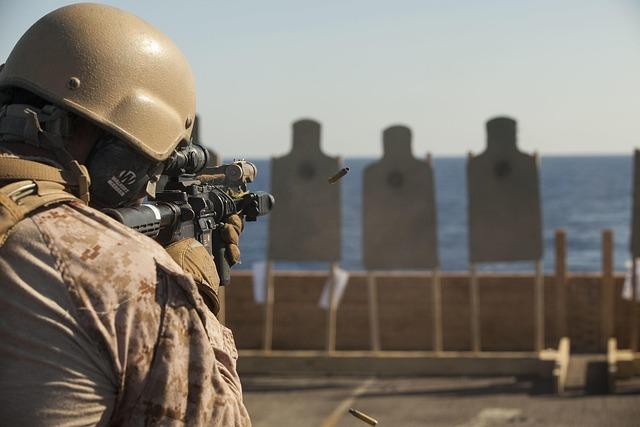
24th Marine Expeditionary Unit Navigates Panama Canal, Boosting Global Rapid Response
The 24th Marine Expeditionary Unit (MEU), embarked on the USS San Antonio (LPD 17), recently executed a critical transit through the Panama Canal, a strategic maritime corridor linking the Atlantic and Pacific Oceans. This maneuver exemplifies the Navy’s dedication to swift global deployment and operational agility, reinforcing collaborative ties with regional partners. The passage not only streamlines naval movement between key theaters but also accentuates the 24th MEU’s essential contribution to U.S. defense objectives across a spectrum of missions.
Highlights from this transit include:
- Intensive readiness drills conducted onboard to sustain optimal operational performance
- Joint interoperability exercises between the MEU and USS San Antonio personnel
- Strict adherence to environmental protection measures throughout the canal navigation
This successful canal crossing not only amplifies U.S. naval presence in the region but also fortifies alliance cooperation through ongoing engagement, underscoring the strategic value of the 24th MEU’s worldwide mission capabilities.
| Unit | Ship | Transit Time | Primary Mission |
|---|---|---|---|
| 24th MEU | USS San Antonio | 12 Hours | Rapid Deployment & Operational Readiness |
USS San Antonio Showcases Advanced Amphibious Operations in Strategic Waterway
The USS San Antonio, a state-of-the-art San Antonio-class amphibious transport dock, demonstrated its sophisticated operational capabilities during the Panama Canal transit alongside the 24th MEU. This passage highlighted the vessel’s proficiency in supporting expeditionary warfare within complex maritime environments, reinforcing the Navy’s strategic presence in both the Indo-Pacific and Latin American regions. The transit provided an opportunity to validate the ship’s enhanced amphibious lift capacity and command-and-control systems, which are vital for rapid Marine deployments worldwide.
Key capabilities exercised during the transit included:
- Advanced command and control technology facilitating flawless coordination with embarked Marine units.
- Streamlined amphibious vehicle deployment enabling rapid offloading of troops and equipment.
- Operational versatility allowing quick adaptation to diverse mission demands.
These capabilities, combined with the strategic positioning achieved post-transit, enhance joint force readiness and interoperability, ensuring a robust response framework for emerging global security challenges.
| Capability | Effect | Operational Advantage |
|---|---|---|
| Command & Control | Coordinated multi-unit operations | Elevated mission synchronization |
| Amphibious Lift | Expedited troop deployment | Greater tactical agility |
| Waterway Navigation | Efficient maneuvering through narrow channels | Extended operational reach |
Navigational Challenges and Operational Triumphs During Panama Canal Passage
The transit through the Panama Canal posed a series of operational complexities for the 24th MEU and USS San Antonio, testing their precision and teamwork. Maneuvering through the canal’s confined locks and variable maritime conditions demanded exact timing and flawless communication among the ship’s bridge, canal officials, and Marine units. Challenges encountered included:
- High traffic congestion during peak periods, requiring meticulous scheduling and agile navigation.
- Environmental variables such as fluctuating currents and limited visibility during dawn and dusk.
- Synchronization of mechanical operations to match vessel speed with lock gate movements for safe passage.
Despite these obstacles, the operation achieved notable successes that reinforce naval proficiency in critical maritime corridors. The integrated efforts of Navy and Marine teams yielded:
| Success Factor | Result |
|---|---|
| Communication | Real-time coordination enabled swift adjustments to lock schedules |
| Navigation | Flawless timing with no delays during lock entry and exit |
| Safety | Zero incidents or equipment damage throughout the transit |
Strategic Insights and Recommendations for Future Naval Transits
The 24th MEU and USS San Antonio’s successful Panama Canal transit highlights the critical role of detailed planning, synchronized teamwork, and continuous communication. To optimize future naval transits, it is essential to prioritize comprehensive crew training simulations that replicate canal navigation challenges, thereby enhancing operational readiness and adaptability. Additionally, employing cutting-edge navigational aids and conducting thorough pre-transit environmental analyses can reduce risks associated with weather fluctuations and canal traffic, ensuring mission objectives are met safely and on schedule.
Operational recommendations include:
- Strengthened collaboration with Panama Canal Authority for dynamic scheduling and contingency management.
- Enhanced inter-branch communication drills between ship crews and embarked Marines to streamline embarkation and debarkation during canal operations.
- Adoption of modular logistics frameworks to allow rapid adjustment based on transit duration and mission needs.
| Focus Area | Recommendation |
|---|---|
| Safety | Continuous monitoring of environmental conditions in real time |
| Communication | Ongoing liaison with canal authorities throughout transit |
| Logistics | Flexible resupply and support contingencies |
Looking Ahead: The Future of U.S. Navy Strategic Mobility
The recent Panama Canal transit by the USS San Antonio and the 24th Marine Expeditionary Unit exemplifies the U.S. Navy’s strategic agility and operational preparedness. This passage not only affirms the Navy’s capacity to project power rapidly and respond to global contingencies but also highlights the enduring partnership between the United States and Panama in safeguarding vital maritime routes. As the 24th MEU advances its deployment, the Navy remains steadfast in sustaining a forward-deployed posture that promotes international stability and security across multiple regions.